Roby Casino Login In Italy

Entering from Italy requires order: profile, payments, limits, and support must be checked before starting.

Fortune Gems 2 Slot

Table of Contents

  • The Dog House Megaways Slot
  • Lucky Joker 10 Extra Gifts Slot
  • Sword of Ares Slot
  • Floating Dragon Hold & Spin Slot
  • Leprechaun Riches Slot
  • Fruit Cocktail Slot
  • The Dog House Megaways Slot
  • Sword of Ares Slot
  • Fruit Million Slot
  • The Dog House Megaways Slot
  • Big Fisherman Slot
  • Big Fisherman Slot
  • Seven Books Unlimited Slot
  • Roby Casino Fortune Slot
  • Sword of Ares Slot
  • Floating Dragon Hold & Spin Slot
  • 9 Mad Hats Slot
  • Floating Dragon Hold & Spin Slot
  • Big Bass Splash Slot

Login Roby Casino And Access Without Errors

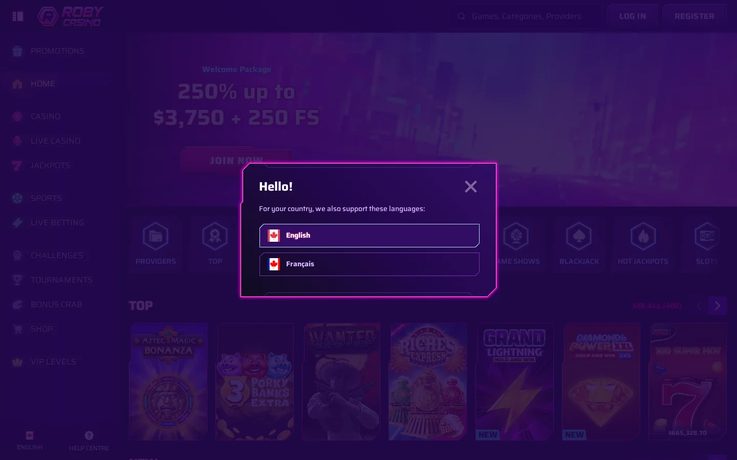
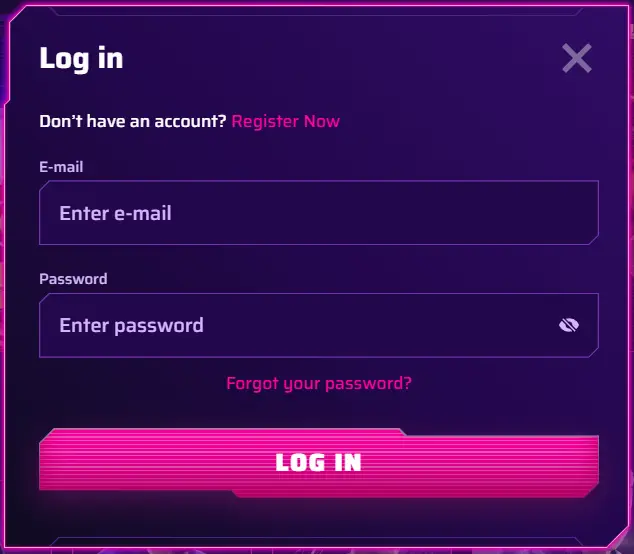
The first login always seems like a quick thing. In practice, however, it's precisely where many users stumble: misspelled email, old saved password, phone keyboard changing a letter, browser full of stored data. When all this adds up, the feeling is that the platform isn't working, while often the problem stems from two or three very normal details.

Login 1

Imagine this scene: you come home, you have twenty minutes free, and you want to log in immediately. You open from your phone, the browser auto-fills the fields, and you confirm without looking too closely. If the data isn't correct, the time you wanted to dedicate to gaming ends up in repeated attempts, password recovery, and checking your inbox. That's why it's worth treating access like a small sequence: check email, verify password, see if the connection is stable, and only then truly begin.

For those usa the platform from Italy, in compliance with applicable rules and only if of legal age, this approach remains the most useful even in 2026. Not because it makes everything slower, but because it removes friction. Once a simple routine is set up, logging in becomes more linear, and sessions also feel more under control.

Registration, Profile, and Verification

Registration is not a separate step from the rest. It's the foundation upon which almost everything rests: login, data confirmation, money movements, profile updates, and contact with support. If that foundation is disorganized, the platform can seem complicated even when it's actually just asking for consistency between the entered information.

Login 2

If you fill in the fields quickly, perhaps at the end of the day, it's easy to leave in an old number, a secondary email address, or a date written without rereading. Imagine creating the account while you're doing something else, with the phone's autocorrect on and little desire to recheck. At that moment, everything seems fine. Then, when you need to verify something or change an important detail, the error you left there at the beginning pops up.

That's why it's advisable to do the opposite of what many do: use a single device, real data, a brief final reread, and a securely stored password. It's not a tedious formality. It's the simplest way to avoid a small administrative error ruining an operation that could have been immediate.

Roby Casino Login From Mobile Or Desktop

The difference between phone and computer isn't just a matter of visual convenience. On mobile, everything appears faster, but also more fragile: just touch the wrong tab, leave auto-completion active, or type a different letter to turn a normal login into a waste of time. On desktop, however, reading history, changing data, or reviewing a procedure is often clearer.

Imagine wanting to log in during a short break. Your phone might suffice. However, if you need to fix your profile, check transactions, or understand why something isn't right, the computer almost always helps more. The choice of device should depend on what you need to do, not just on what's closest at hand.

Data to Prepare Before First Login

Before creating your account, it's advisable to have four items ready: a valid document, an email you actually use, an active phone number, and a payment method in your name. It seems like little, but it's precisely this minimal preparation that avoids the most annoying interruptions. If you're missing just one of these points, the registration breaks down at the least convenient moment.

If you log in thinking you'll improvise, the risk is using an old address, a number you no longer check, or a card that later causes confusion. Imagine reaching the last step and stopping because you can't remember which email you wanted to link. That doubt alone can make you lose more time than the entire registration.

Frequent Profile Errors and How to Avoid Them

The most common errors aren't strange. They are trivial, and precisely because of this, they repeat. A wrong letter in the surname, a date entered in haste, a password too similar to an old one, an incompletely updated contact detail. The problem is that these errors don't cause trouble immediately: they emerge when you want to do something concrete.

If a user realizes late that the profile is inconsistent, they tend to blame the platform. In reality, it was often enough to reread everything just once. An initial check of two minutes is worth much more than ten minutes spent later fixing already confirmed fields.


Payments, Budget, and Pace of Play

Money is the part where you immediately understand if the use of the account is orderly or impulsive. Even before choosing what to play, it's worth deciding how much you want to spend, how long you want to stay, and by what method it will be easiest for you to track your movements. If these three points remain vague, even a small session can seem confusing.

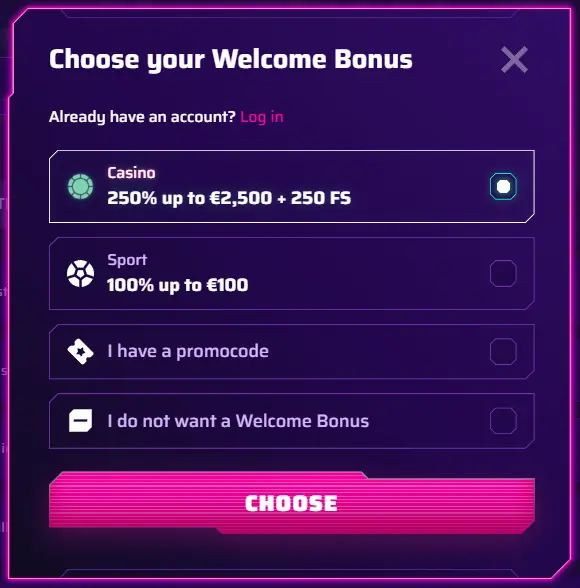
Login 3

Imagine this scenario: you make a quick deposit because you just want to try, then you return to the balance several times during the evening and realize that you hadn't actually decided anything. Neither the actual amount of the session, nor how long it should last, nor how you would check the result at the end. The problem here is not the payment method. It's the absence of a minimum plan.

For those playing from Italy, it makes much more sense to treat the budget as a fixed amount, separate from rent, groceries, transportation, and other daily commitments. If the money dedicated to gambling changes depending on your mood, it's no longer a budget: it's a reaction. And when you enter reactive mode, even the simplest choices lose clarity.

Expectation

What's Worth Checking

Initial deposit

A sustainable amount for a single session

Chosen method

Ease of reading history and movements

Holder's data

Consistency between profile and tool used

Weekly budget

A realistic ceiling separate from other expenses

Playtime

A duration decided before entering

Final check

Quick balance check before leaving

How to Choose a Method Without Confusion

The best tool is not always the one that seems fastest. It's often the one that lets you read your history better and helps you avoid mixing gambling with expenses from the rest of the week. Imagine using the same method for bills, purchases, travel, and entertainment sessions. At the end of the month, figuring out where the money went becomes much less immediate.

Many users prefer to separate. Not out of rigidity, but because it allows them to see more clearly if they are respecting their limits. When the reading of movements is clear, even breaking a bad habit becomes easier.

Catalog, Session, and Clearer Choices

Once you're in, the most common mistake is to open the first thing that appears. But the right question isn't what attracts you most at that moment. It's what fits your evening, your time, and how you want to be on the platform. Not all sessions require the same intensity, and it's not always advisable to approach the catalog in the same way every day.

Imagine coming back tired and choosing a very fast game just because it's in front of you. After a few minutes, you're already jumping from one section to another without a clear direction. In these cases, the catalog isn't the problem. It's the absence of an initial criterion. Reducing options, instead of increasing them, usually works better.

Curiosity should also be kept separate from commitment. Exploring is fine, but it doesn't mean you have to stick with everything. Those who enter with a simple idea - a short session, a single category, a fixed amount - often leave with much more clarity than those who get carried away by every visual stimulus.

When a Session Should Be Shortened

You don't need to wait for a dramatic signal to realize it's time to close. Sometimes it's enough to notice that you're changing your mind too often, that you're checking your balance more than usual, or that the pleasure of the session has turned into mere persistence. Imagine entering for half an hour and finding yourself an hour later still doing 'just one more round.' That phrase alone says a lot.

When this happens, shortening the visit is almost always more useful than insisting. Leaving at the right moment doesn't ruin the session. It often saves it.

How to Read Playtime Before Entering

The best way to manage duration is to decide beforehand, not during. If you start without an idea of time, any break will lengthen. If, on the other hand, you enter with a limit already in mind, your behavior on the platform changes. Imagine two users: one opens the account saying 'let's see,' the other decides in advance that they will stay for twenty minutes. The second one usually notices much sooner when it's time to close.

Support, Limits, and Pause Tools

Assistance should not be seen as a last resort. It's for clarifying doubts about access, profile, movements, data verification, or steps not understood. The sooner you ask for help on a specific point, the easier it is to explain the context and get a useful answer. Waiting days almost always makes things worse, because in the meantime you forget details that mattered.

Imagine noticing a setting that doesn't save or profile information that doesn't appear as it should. If you postpone it, it will be harder to remember which device you were using, what steps you've already taken, and at what point the error appeared. If, on the other hand, you clarify the problem immediately, the situation remains more readable.

Alongside support are personal control tools. Talking about responsible use without concrete actions is of little use. It's much more important to translate that idea into time limits, spending limits, temporary breaks, and, if necessary, self-exclusion. The platform works better when the player treats it as a tool and not as an evening routine.

Roby Casino Login As Part Of A Routine

Logging in shouldn't be the final goal, but the first step of a small routine: access, balance check, limits verification, choosing a single direction for the session. Imagine someone who logs in and plays immediately without looking at anything else. They start fast, but often end up without a clear picture. Those who instead take a minute to check everything first, decide better and realize sooner if the session is changing tone.

When Does Activating a Timeout Make Sense

A temporary break makes sense when using the account stops feeling like a choice and starts feeling like a reflex. It happens more often than you might think. Imagine a week where every login starts as 'just five minutes' and systematically ends up lasting much longer. That repetition is already a sufficient signal.

Taking a break is not a defeat. It's often the smartest way to regain clarity on how much space the game was taking up.

How to Write to Support Clearly

A useful message is brief, but precise. What you were doing, from which device, what you saw, and what steps you had already tried. If you only write that it 'doesn't work', you force the other party to reconstruct everything from scratch. If, instead, you immediately provide context, the response tends to be much more targeted.

Signs Not to Ignore

Logging in more often than expected, increasing the budget because 'this time I'll recover', staying online without a real reason, or getting irritated when it's time to leave are clear signs. They don't all need to happen at once. It's enough if they start to repeat. If you notice this pattern, it's advisable to slow down immediately instead of waiting for the routine to shift even further.

General Experience for Those Playing from Italy

For those usa this platform from Italy, the general experience weighs less due to visual effect and more due to concrete clarity. Is it clear where to go? Are the movements readable? Is support reachable? Does the profile update without confusion? These questions matter more than any slogan.

Imagine two different people. The first logs in occasionally and wants a short session. The second often checks their budget, time, and history. They have different needs, but expect the same thing: a platform that doesn't force them to improvise. When everything is clear, trust also increases. When every step forces you to stop and guess, the opposite feeling arrives very quickly.

In 2026, the best impression is almost always born from well-repeated details: readable history, clear login steps, easy-to-set limits, support that doesn't hide, payments that are understood effortlessly. It's not spectacular, but it's what really matters when you usa an account regularly.

FAQ

The most useful thing is to stop and take one step at a time. First, check that you are using the correct email, then check if the browser has saved an old password, and finally usa the recovery only once. Many users worsen the situation precisely because they repeat multiple requests within a few minutes and then don't understand which message to follow. If the procedure is done in order, the problem is usually resolved much more quickly.

It depends on what you need to do and the time you have. The phone is convenient for quick logins, but also more prone to small typing or navigation errors. The computer, on the other hand, is more helpful when you need to carefully read your profile, check documents, or review transactions. If you need to complete the entire registration calmly, the large screen almost always gives you more clarity.

A budget makes sense when it's decided before the session and doesn't change based on mood or the outcome of the first few minutes. It should be separate from the week's necessary expenses and clear enough to be respected without self-negotiation. If you find yourself increasing the amount just to chase a feeling or 'recover', then you are no longer following a limit, but a reaction.

The first thing is not to minimize it. It's advisable to immediately ask yourself why it happened: was there a time limit missing, were you tired, were you changing sections too often, or had you left the visit open without a clear objective? This small analysis is worth more than a generic promise to do better tomorrow. When you understand the cause, you can truly correct the next session.

As soon as a concrete doubt arises that you don't want to resolve through trial and error. The more recent the problem, the easier it is to describe it well: what you were doing, where you were, from which device you were logging in, and what steps you had already tried. Waiting too long rarely helps. On the contrary, it makes you lose details that then become useful precisely for obtaining a clear answer.

The most common are logging in out of habit, staying longer than planned, increasing spending without prior decision, or feeling annoyed when it's time to close. It's not necessary for all of them to appear together. If you start to recognize even just a few of them with some frequency, a short break can become a much smarter choice than continuing out of inertia.

It's worth looking at the balance, recent transactions, and the actual duration of the session. There's no need to turn closing into a long procedure, but it's useful to leave the account tidy for the next time. A final check of a few seconds helps you better understand how you used your time and money and significantly reduces confusion when you log back in.

EN